
Citroen Manuals
Models
Select a model to view manuals.
Citroen A Brand Built on Comfort, Creativity, and Practical Innovation
Origins of a Different Automotive Philosophy
Citroën was founded in 1919 by André Citroën, an industrialist with a strong belief that cars should be accessible, practical, and comfortable for everyday life. From its earliest years, the brand positioned itself as a challenger to established norms, focusing not on prestige or performance alone, but on solving real problems faced by drivers. This mindset shaped Citroën’s identity as a manufacturer willing to experiment, rethink conventions, and prioritize user experience over tradition.
Unlike many early carmakers that evolved from luxury or motorsport backgrounds, Citroën emerged with a clear industrial vision. Mass production, standardized components, and efficient manufacturing allowed the brand to scale quickly and reach a wide audience. This foundation helped Citroën become one of the most recognizable automotive names in Europe within just a few decades.
Engineering Boldness and Iconic Innovation
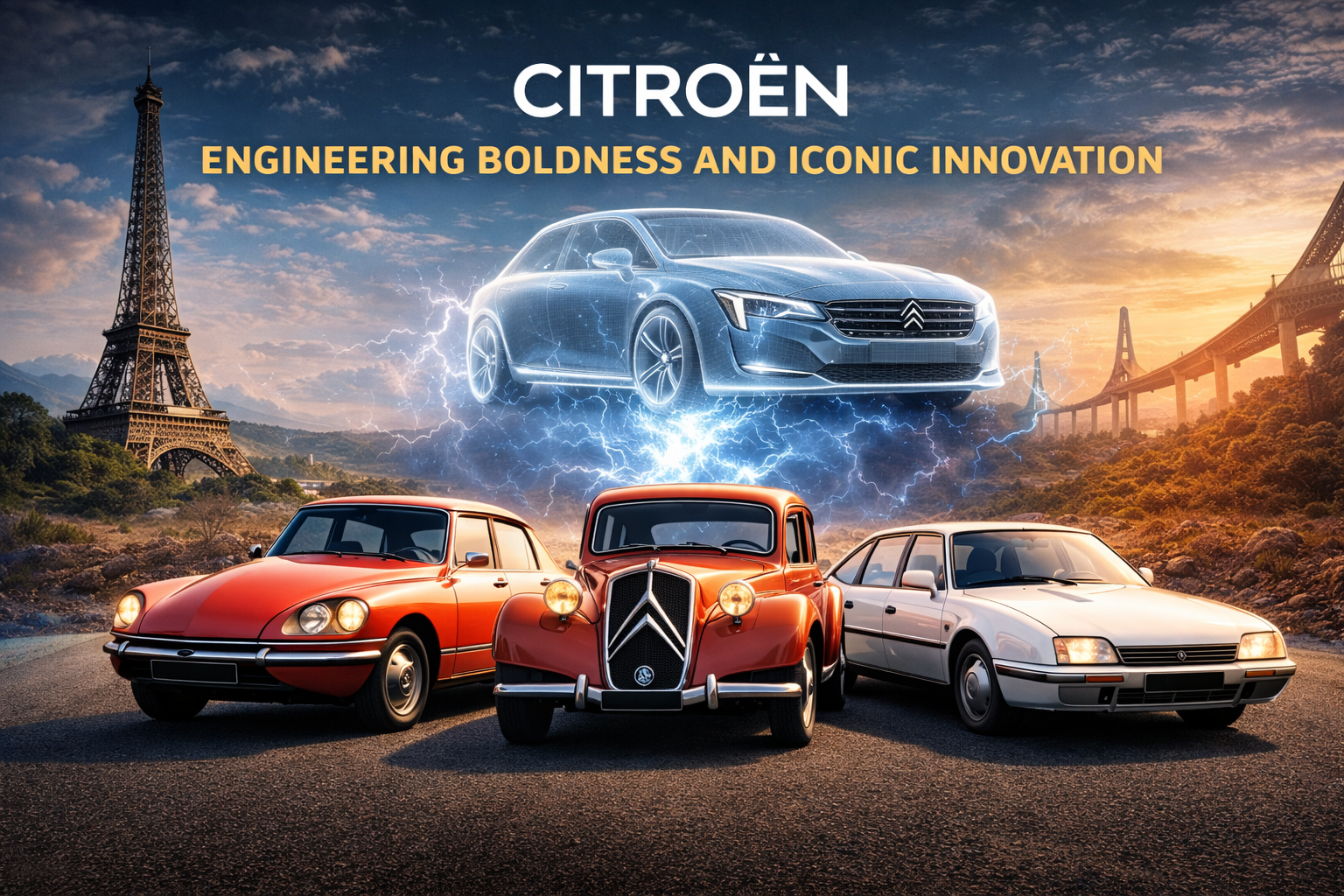
Citroën’s history is marked by a series of technical breakthroughs that redefined what mainstream cars could offer. The introduction of front-wheel drive in large-scale production, aerodynamic body shapes, and advanced suspension systems demonstrated the brand’s willingness to take risks. These innovations were not introduced for novelty alone; they were intended to improve stability, comfort, and ease of driving.
One of Citroën’s most distinctive engineering contributions was its approach to ride quality. The brand became synonymous with smooth, floating comfort, especially through its pioneering suspension technologies. This focus on comfort became a core value that continues to influence Citroën vehicles today, even as technologies evolve.
Design That Breaks the Mold
Citroën design has rarely followed conservative trends or short-lived styling formulas. Instead, the brand has consistently embraced bold visual ideas, unconventional proportions, and expressive details that give its vehicles a distinct identity. From classic mid-century models that challenged traditional automotive shapes to modern crossovers and hatchbacks with confident lines and unique lighting signatures, Citroën vehicles often stand apart visually from competitors and are immediately recognizable on the road.
This design philosophy reflects a broader belief that cars should have personality and character, not just functional form. Interiors are typically designed with openness and practicality in mind, emphasizing generous space, good visibility, and intuitive layouts that feel welcoming rather than restrictive. Materials and control placement are chosen to create a relaxed and comfortable environment instead of an intimidating or overly technical cockpit, reinforcing Citroën’s long-standing human-centered approach to vehicle design.
Vehicles for Everyday Life
Citroën’s lineup has traditionally focused on practical mobility solutions rather than niche performance segments. Compact cars, family hatchbacks, sedans, and versatile vans have formed the backbone of the brand’s global presence. These vehicles are engineered to handle varied road conditions, long daily commutes, and changing lifestyle needs.
In many regions, Citroën models gained popularity precisely because of their durability and adaptability. Whether navigating narrow city streets, rural roads, or long-distance travel, Citroën vehicles have often been chosen for their balance of comfort, simplicity, and efficiency rather than outright performance figures.
A Global Brand with Local Impact
Although Citroën is deeply rooted in France, its influence extends far beyond its home market. Over the decades, the brand established manufacturing and sales operations across Europe, South America, Africa, and parts of Asia. In several regions, Citroën vehicles became known for their resilience in challenging environments, contributing to the brand’s reputation for practicality and reliability.
This global reach required Citroën to adapt its vehicles carefully to local road conditions, climate differences, and customer expectations while still maintaining a consistent brand identity. The ability to balance a recognizable global design language with regional engineering and market requirements has been a key factor in Citroën’s long-term relevance, allowing the brand to remain practical, approachable, and competitive across very different parts of the world.
Cultural Presence and Automotive Heritage
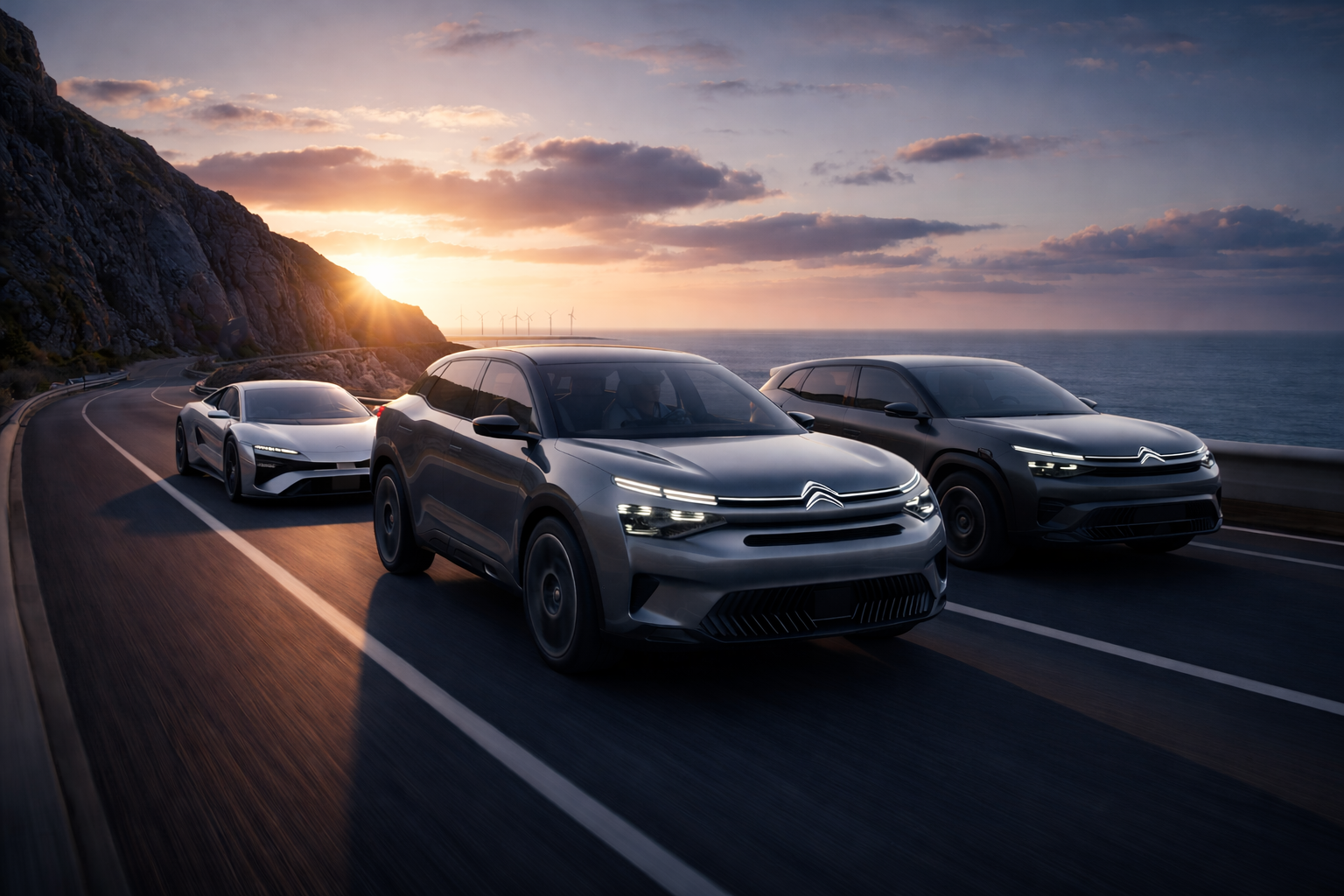
Citroën occupies a unique place in automotive culture. Certain models transcended their role as transportation and became symbols of entire eras. These vehicles appeared in films, art, and everyday street scenes, reinforcing Citroën’s image as a brand closely connected to real life rather than exclusivity.
Museums, classic car communities, and enthusiast groups continue to celebrate Citroën’s heritage, particularly its unconventional engineering choices and distinctive aesthetics. Exhibitions, restorations, and community events keep iconic models visible and relevant, while also introducing new audiences to the brand’s unique approach to automotive design. This cultural legacy contributes to ongoing interest in both historic and modern Citroën vehicles, reinforcing the brand’s reputation as one that values originality, comfort, and creative thinking across generations.
Evolution in the Modern Era
In recent years, Citroën has continued to evolve while staying true to its core values. Modern models emphasize comfort, efficiency, and ease of ownership, often incorporating simplified interfaces and user-friendly technologies. Rather than competing directly in performance-focused segments, Citroën positions itself as a brand that prioritizes relaxed driving and practical innovation.
This evolution aligns with broader shifts in the automotive industry, where comfort, usability, and accessibility are becoming increasingly important to a wide range of drivers. Citroën’s long-standing focus on these areas gives the brand a distinct voice in a crowded market, allowing it to remain relevant by offering vehicles that feel approachable, thoughtful, and well suited to everyday life rather than defined by excess or complexity.
Why Citroën Remains Relevant
Citroën’s enduring appeal lies in its consistency of purpose. For more than a century, the brand has approached automotive design with a clear objective: to make cars that serve people’s daily needs in a thoughtful, practical, and approachable way. Rather than chasing short-term trends or defining itself through excess, Citroën has remained focused on creating vehicles that feel comfortable, intuitive, and suited to real-world use.
Over time, technologies, regulations, and market expectations have changed significantly, yet this underlying philosophy has remained intact. Citroën has adapted its designs and engineering to new eras while preserving the core values that shaped the brand from the beginning. This continuity has allowed Citroën to evolve without losing its identity, maintaining a recognizable character even as materials, platforms, and production methods advanced.
For drivers, enthusiasts, and researchers exploring automotive history and model lineups, Citroën represents a brand that has never been afraid to be different. Its vehicles tell a story of innovation rooted in practicality, creativity balanced with function, and comfort elevated to a defining principle. This combination ensures that Citroën continues to stand out not through excess or spectacle, but through purposeful design and enduring character that resonates across generations.