Porsche Manuals
Models
Select a model to view manuals.
Porsche - When Engineering Discipline Becomes a Competitive Advantage
Porsche occupies a unique position in the automotive industry—not because of loud marketing statements or frequent reinvention, but because of long-term engineering consistency. While many manufacturers redefine themselves every decade, Porsche has followed a different path: refining the same core principles with increasing precision. This approach has allowed the brand to remain competitive across generations, technologies, and market shifts without losing its technical identity.
At its core, Porsche is built around the idea that performance must be repeatable, controllable, and measurable. Speed alone is never the objective. Instead, the focus is on balance—between power and traction, feedback and stability, innovation and durability. This philosophy shapes every Porsche vehicle, from classic sports cars to modern electric platforms.
Engineering First, Branding Second
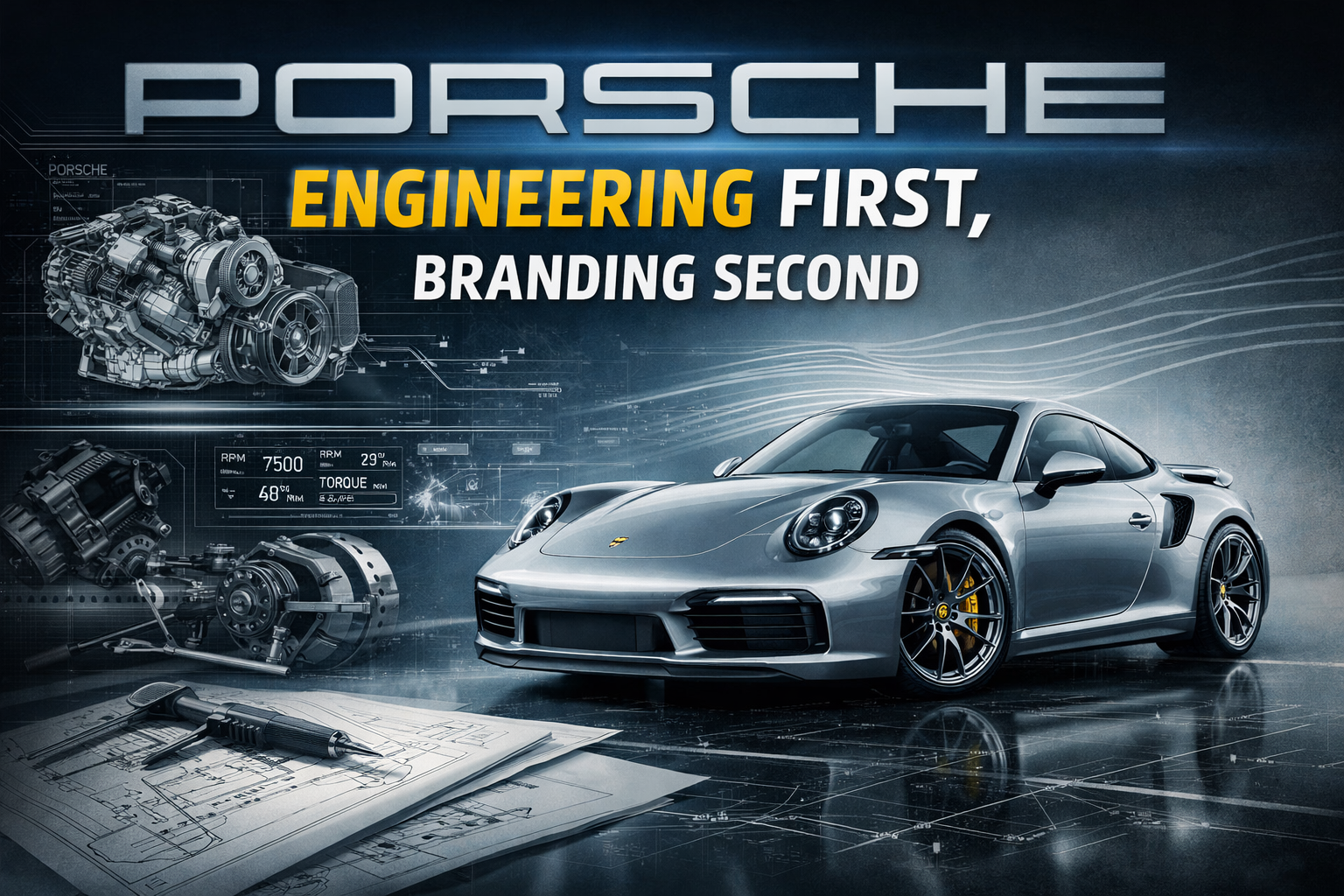
Unlike many performance-oriented manufacturers, Porsche does not begin development with design trends or emotional positioning. Engineering decisions come first. Vehicle architecture, weight distribution, drivetrain layout, and thermal management are defined long before exterior styling is finalized. Design follows function—not the other way around.
This mindset explains why Porsche models evolve gradually rather than dramatically. The well-known rear-engine configuration of the 911 was not preserved for nostalgia, but because engineers continued to prove its advantages through decades of refinement. Each generation improves stability, cooling efficiency, and driver control, demonstrating how disciplined iteration can outperform radical redesign.
Precision as a System, Not a Feature
Porsche vehicles are often described as “precise,” but this precision extends far beyond steering feel or chassis tuning alone. It is systemic and intentional. Power delivery, braking response, suspension behavior, and electronic assistance systems are engineered to operate as a single, coordinated unit rather than independent layers of technology. Each system is calibrated to support the others, creating predictable and balanced vehicle behavior across a wide range of driving conditions. No single system is allowed to dominate or compensate for weaknesses elsewhere, ensuring that performance remains controlled, transparent, and repeatable rather than artificial or overly assisted.
Electronic driver aids in Porsche vehicles are calibrated conservatively. Instead of masking driver input or correcting mistakes aggressively, they are designed to intervene only when necessary. This approach preserves driver awareness and reinforces trust between the vehicle and its operator. The result is a driving experience that feels predictable rather than artificial.
Performance Without Fragility
High-performance vehicles often suffer from a reputation for complexity and sensitivity, leading to the assumption that performance and durability cannot coexist. Porsche challenges this perception by treating reliability as a core engineering requirement rather than a secondary outcome. Major components are developed to withstand sustained mechanical and thermal loads instead of short bursts of peak performance. Cooling systems, lubrication pathways, and material tolerances are extensively tested under conditions that exceed typical road use, ensuring consistent operation even during prolonged high-demand driving. This disciplined approach allows Porsche vehicles to deliver repeatable performance without compromising long-term mechanical integrity.
This engineering discipline explains why many Porsche vehicles retain mechanical integrity over long service lives when maintained correctly. Durability is not achieved through overengineering or redundancy, but through precise calibration and system balance. Each component is designed to operate within clearly defined limits, reducing unnecessary stress and long-term wear.
Technology Integrated With Intent
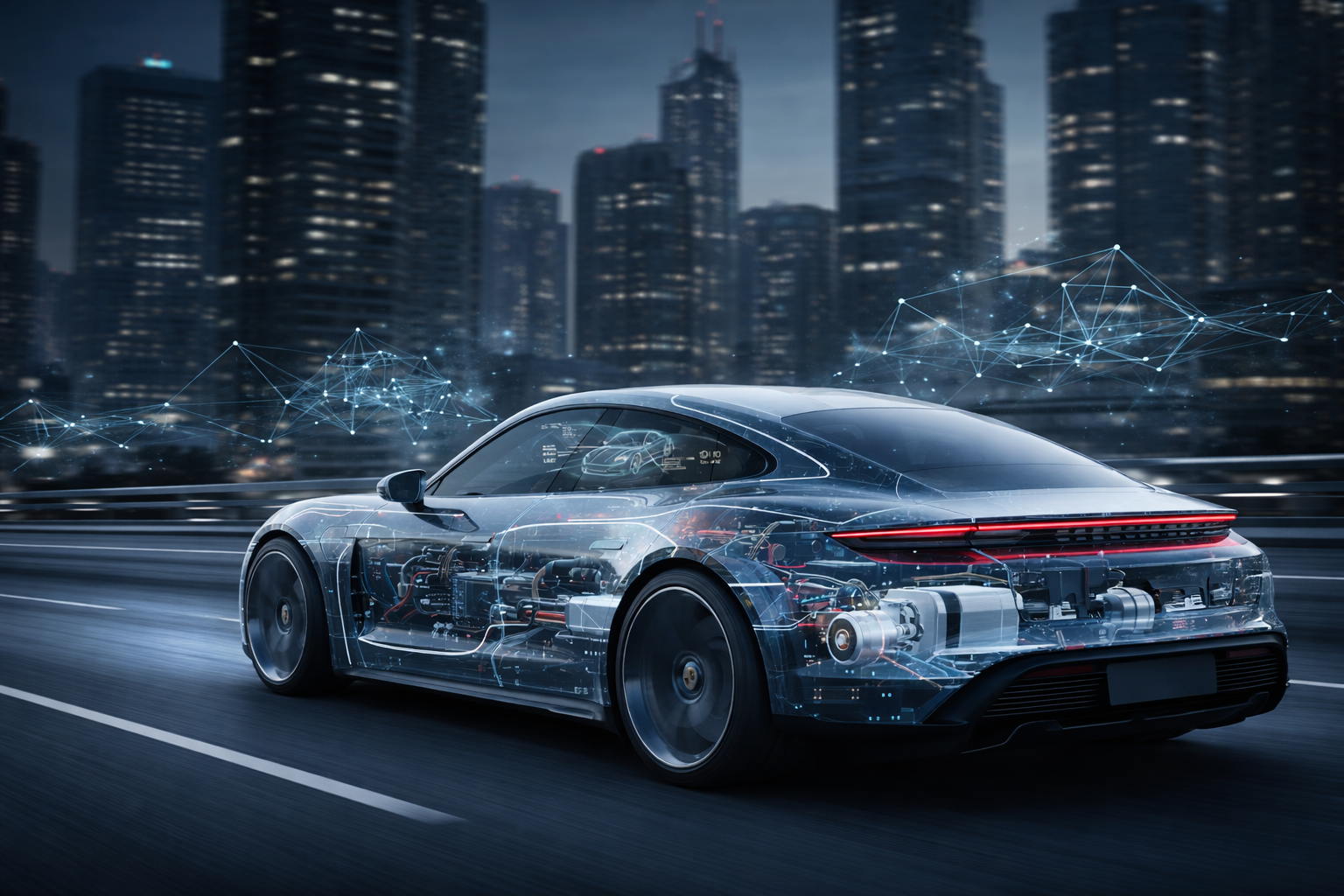
Porsche integrates new technologies cautiously and purposefully, guided by the principle that innovation must deliver measurable benefits to the driving experience. Digital interfaces, driver assistance systems, and electrification solutions are evaluated based on their ability to enhance control, efficiency, and consistency rather than novelty or visual impact. Each new feature is tested for how it affects driver awareness, vehicle response, and system reliability under real operating conditions. Technologies that add complexity without clear functional value are deliberately avoided, ensuring that every system introduced serves a defined role within the vehicle’s overall engineering balance and long-term usability.
The Taycan exemplifies this approach. Battery placement improves weight distribution, regenerative braking is tuned for natural pedal feel, and power delivery remains linear and predictable. Rather than attempting to redefine electric performance emotionally, Porsche focused on making electric driving feel structurally familiar to experienced drivers.
Centralized Technical Documentation as Part of the Porsche Engineering Ecosystem
For Porsche owners who value precision and technical accuracy, access to correct vehicle information is not optional—it is an essential part of responsible ownership. The Car Manuals Database functions as a centralized source of official digital documentation, designed to support Porsche’s engineering philosophy by providing clear, structured, and model-specific technical guidance. Instead of relying on fragmented sources or generalized advice, owners can reference documentation that reflects how each vehicle was engineered to operate.
Manuals and technical guides are organized by model and production year, ensuring that the information aligns with the exact vehicle configuration, systems, and technologies in use. This level of accuracy is especially important for vehicles built around tightly integrated systems, where drivetrain behavior, electronic assistance, thermal management, and performance settings are designed to work together within defined parameters.
By offering digital access to official documentation, the platform allows owners to consult reliable technical data whenever it is needed—whether to better understand system behavior, prepare for scheduled maintenance, interpret alerts, or review operational limits before demanding driving conditions. Clear documentation reduces uncertainty, supports informed decisions, and reinforces the long-term reliability and coherence that define the Porsche ownership experience.
Consistency in a Disruptive Industry
As the automotive industry undergoes rapid transformation, Porsche continues to prioritize consistency over reaction. Electrification, automation, and sustainability are adopted selectively, guided by engineering validation rather than market pressure. This approach allows Porsche to evolve without compromising its structural identity.
Rather than competing on novelty, Porsche competes on execution. New platforms, materials, and software are introduced only when they meet established performance and reliability standards. This disciplined process ensures that progress strengthens the brand rather than fragmenting it.
Porsche engineering philosophy is defined by restraint, precision, and long-term accountability. Through systematic development, integrated systems, and transparent ownership support, Porsche delivers vehicles designed not only to perform—but to remain coherent, dependable, and relevant over time.