
Mitsubishi Manuals
Models
Select a model to view manuals.
Mitsubishi Vehicles Built on Engineering Heritage and All-Terrain Reliability
Mitsubishi is a brand shaped by industrial discipline, mechanical precision, and decades of global engineering experience. Unlike manufacturers that emerged solely from automotive origins, Mitsubishi’s background spans shipbuilding, heavy machinery, aerospace development, and advanced industrial systems. This broader technical foundation continues to influence how the company designs its vehicles today—prioritizing durability, structural integrity, and predictable long-term performance.
Over time, Mitsubishi Motors developed a reputation for practical engineering and real-world capability. Whether navigating city streets, rural highways, or challenging terrain, Mitsubishi vehicles are built to operate consistently in diverse environments. The brand’s philosophy blends mechanical reliability with modern driver assistance and electrified technologies, creating vehicles that balance innovation with functional simplicity.
This engineering-driven identity allows Mitsubishi to remain relevant in an industry defined by rapid change. Instead of reacting impulsively to short-term trends, the brand tends to evolve its platforms steadily, refining core systems while integrating new technologies in measured stages. The result is a lineup of vehicles that feels stable and purpose-built—designed not only for performance today, but for dependable operation over many years of ownership.
Mitsubishi Engineering Philosophy and Brand Heritage
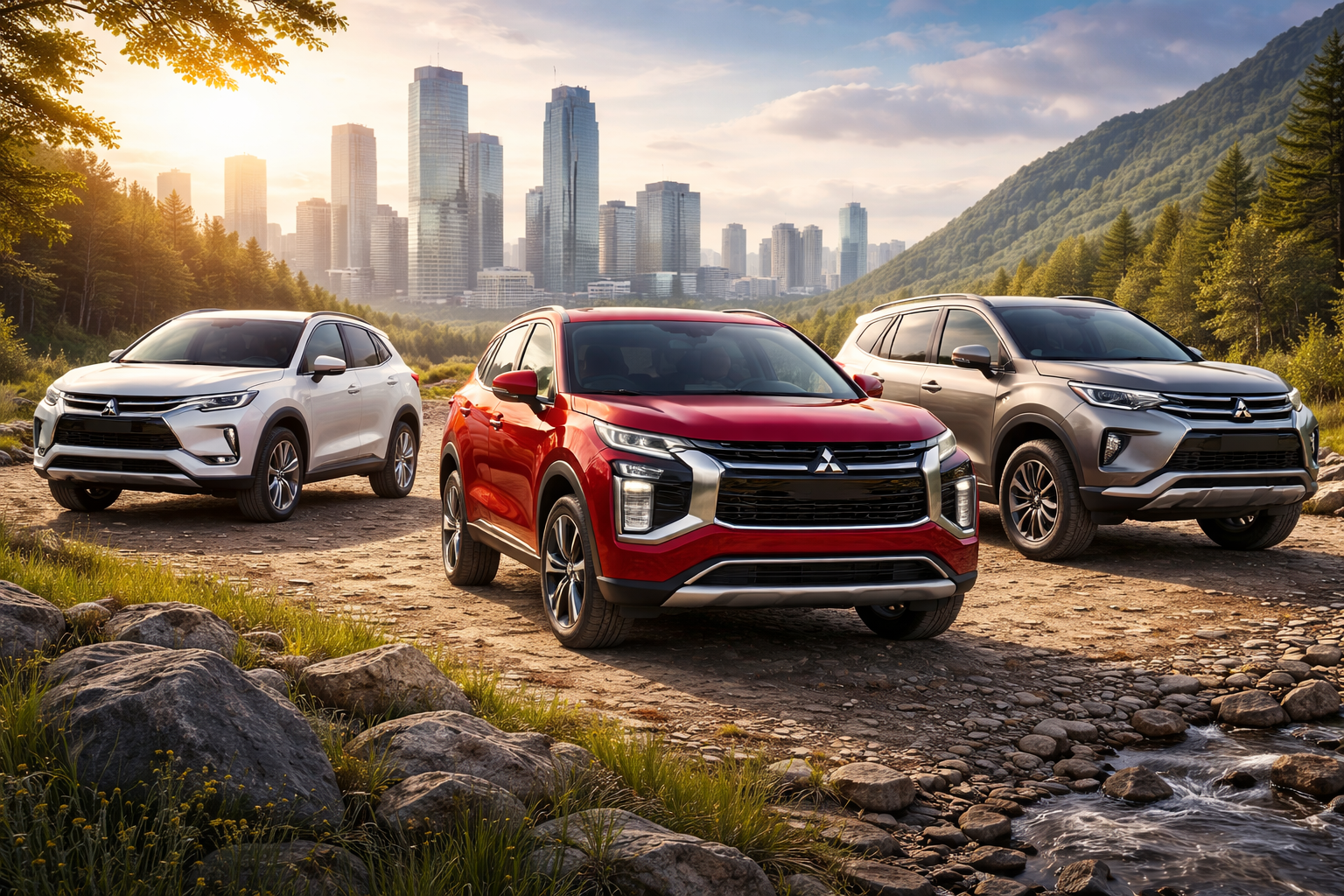
Mitsubishi’s automotive philosophy reflects its industrial roots. Engineering decisions are often conservative and durability-focused, favoring proven systems and stress-tested components over rapid experimentation. This mindset has helped Mitsubishi maintain a reputation for vehicles that perform reliably across extended ownership cycles.
Structural rigidity, balanced suspension geometry, and drivetrain robustness are common characteristics across the lineup. Rather than pursuing aggressive technological complexity, Mitsubishi frequently emphasizes systems that integrate smoothly and operate predictably under sustained use. This approach appeals to drivers who prioritize consistency and long-term value over short-lived trends.
In addition, Mitsubishi’s development process places strong emphasis on real-world validation. Prototypes undergo testing in varied climates and terrain conditions to ensure performance remains stable under heat, cold, altitude, and heavy load. By combining laboratory precision with field testing, the brand reinforces its commitment to engineering solutions that withstand everyday demands rather than perform only under ideal conditions.
All-Wheel Control and Real-World Driving Capability
One of Mitsubishi’s defining strengths lies in its advanced all-wheel-drive expertise. The brand’s Super All-Wheel Control (S-AWC) system integrates torque distribution, braking control, and stability management into a coordinated framework. Instead of simply transferring power between axles, the system continuously analyzes road conditions and driver input to maintain traction and directional control.
This capability is particularly valuable in regions with snow, rain, gravel roads, or uneven terrain. Mitsubishi vehicles are engineered to maintain composure when surfaces change unexpectedly, allowing drivers to feel confident even in demanding weather conditions. Rather than focusing solely on off-road marketing appeal, Mitsubishi’s AWD systems are designed to improve everyday safety and predictability.
By coordinating power delivery with electronic stability systems and braking inputs, Mitsubishi enhances vehicle balance during cornering, acceleration, and sudden directional changes. This integrated approach reduces wheel slip, improves steering response, and supports smoother handling in low-grip situations. As a result, the technology contributes not only to off-road performance but also to everyday driving stability on highways and urban roads.
Mitsubishi SUVs and Global Model Lineup
Mitsubishi’s modern lineup centers primarily around SUVs and crossovers, reflecting global market demand for versatile vehicles. Models such as the Outlander, Eclipse Cross, and ASX demonstrate the brand’s focus on practical family mobility combined with capable drivetrains.
The Outlander in particular has become a key global product, offering balanced interior space, safety systems, and efficient powertrain options. Meanwhile, compact crossovers appeal to urban drivers who require maneuverability without sacrificing elevated ride height and cargo flexibility. Across these models, Mitsubishi maintains a consistent design language that favors functional aerodynamics and structural durability.
Beyond design and layout, Mitsubishi continues to refine safety integration and cabin usability across its SUV range. Advanced driver-assistance systems, improved visibility, and intuitive control interfaces are incorporated without overwhelming the driver. This focus on clarity and practicality ensures that the vehicles remain approachable for families while still offering the structural strength and drivetrain confidence expected from the brand.
Electrification and PHEV Innovation
Mitsubishi was among the early adopters of electrified drivetrains within the SUV segment. The Outlander Plug-in Hybrid (PHEV) became one of the world’s best-selling plug-in hybrid SUVs, demonstrating the company’s early commitment to practical electrification.
Rather than positioning electrification as purely performance-oriented, Mitsubishi focused on efficiency, regenerative braking integration, and intelligent energy management. The system combines electric motors with an internal combustion engine in a way that maximizes real-world range flexibility. This approach allows drivers to operate in electric mode for short daily commutes while retaining long-distance capability.
By integrating hybrid systems within structurally robust platforms, Mitsubishi ensures that electrification enhances versatility rather than limiting it. The brand continues to refine battery durability, thermal management, and system reliability as part of its evolving electrified strategy.
From Shipbuilding to Rally Championships: Mitsubishi’s Unique Journey
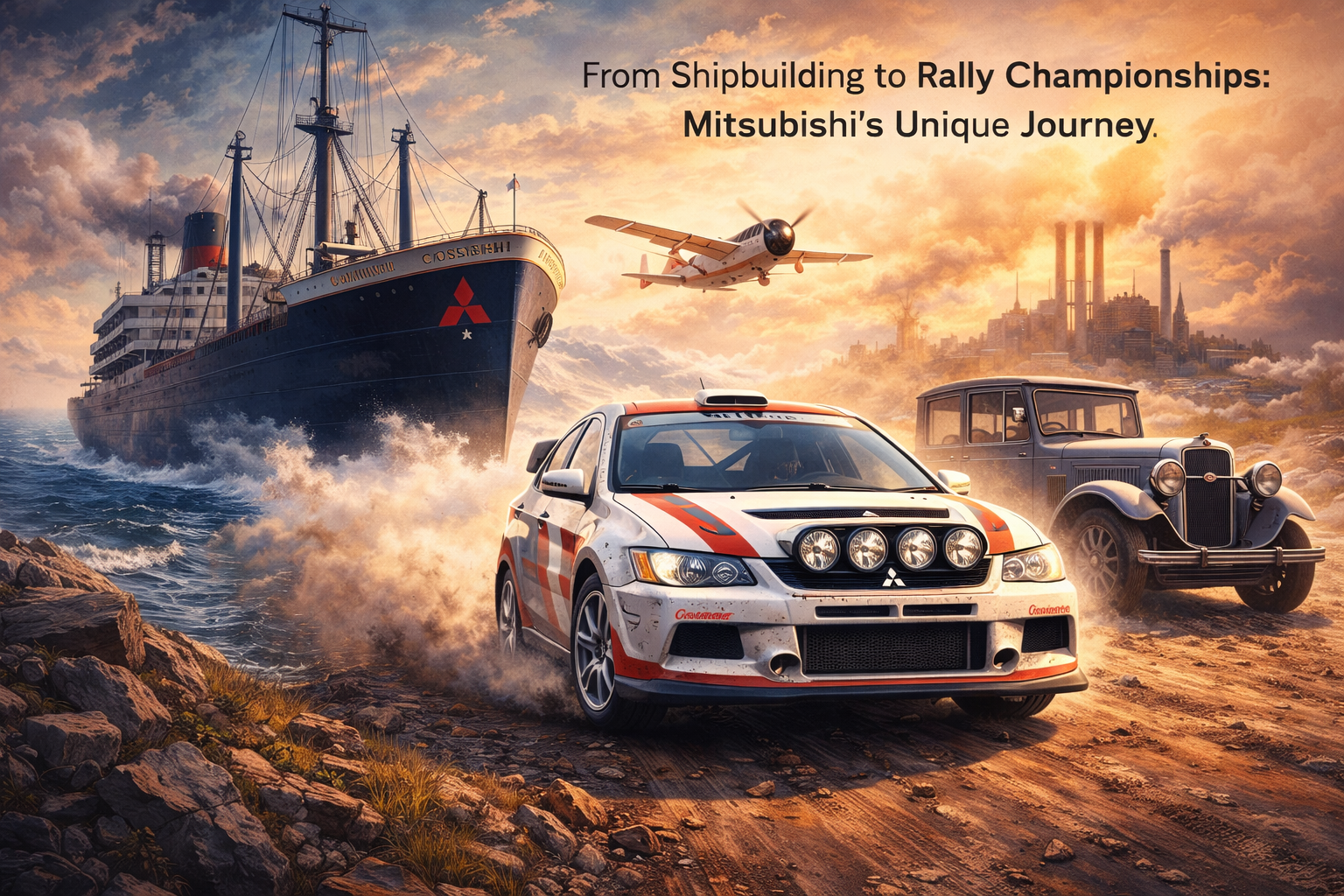
Mitsubishi’s origins trace back to heavy industry and shipbuilding, a background that deeply influenced its engineering culture. Precision manufacturing, structural integrity, and materials science were embedded into the company long before passenger vehicles became its primary focus. This industrial DNA helped shape the durability standards that later defined its automotive products.
In the late twentieth century, Mitsubishi also gained international recognition through motorsport. Its achievements in the World Rally Championship, particularly with the Lancer Evolution series, demonstrated the brand’s mastery of turbocharged performance and all-wheel-drive dynamics. Multiple championship titles reinforced Mitsubishi’s credibility in high-performance engineering and traction control systems.
The lessons learned from rally competition—rapid torque delivery, chassis balance, and drivetrain resilience—filtered into production vehicles. Even today, the emphasis on controlled power distribution and driver stability reflects that competitive heritage. Few manufacturers can claim such a direct bridge between industrial engineering, motorsport success, and everyday mobility.
Long-Term Ownership, Maintenance, and Reliability
Mitsubishi vehicles are designed with long-term ownership in mind. Components are selected for durability under sustained load, and service intervals are structured to promote preventive maintenance. This philosophy aligns with markets where vehicles are kept for many years and operated in varied conditions.
Routine care, accurate diagnostics, and adherence to manufacturer specifications play a significant role in maintaining performance. When properly maintained, Mitsubishi vehicles are known for predictable operation and mechanical resilience. The brand’s conservative engineering strategy often results in fewer unexpected system interactions, which supports steady long-term reliability.
As the automotive industry transitions toward greater electrification and digital integration, Mitsubishi continues to balance innovation with mechanical clarity. By combining its industrial heritage, all-wheel-drive expertise, and electrified development strategy, the brand remains positioned as a manufacturer focused on dependable, adaptable mobility rather than fleeting technological trends.